

What the Results Mean for Ohio’s Life Sciences Industry
1. Executive Summary
Overall election takeaway
The November 3rd, 2026 election brought significant changes to Ohio’s political landscape. Democrats won the Governor’s Office for the first time in 16 years, are positioned to hold an 8-7 majority in Ohio’s Congressional Delegation, pending one outstanding race, and won nearly all statewide offices. At the Statehouse, Republicans retained control of both Legislative chambers, but only kept a veto-proof supermajority in the Ohio Senate.
These changes will affect how state policy is developed heading into 2027 as the incoming administration will help shape Ohio’s priorities for economic development, healthcare, research, workforce, and the state budget. For the life sciences industry, this creates an opportunity to build relationships with new leaders and reinforce the importance of the sector in Ohio’s economy. OLS has been actively engaged with the Governor-Elect’s campaign and will continue that relationship as her administration takes shape. OLS will serve as a resource to provide insights and advice on how to best position Ohio to be a leader in the life sciences.
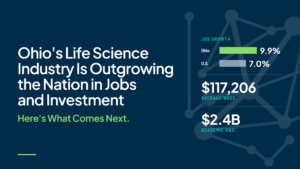
Ohio’s life sciences industry is a significant contributor to the state’s economy. According to the 2026 TEConomy report, Ohio’s bioscience industry supports 66,197 jobs and grew 9.9% between 2021 and 2025, outpacing national growth. Average annual wages reached $117,206, approximately 73% higher than the state’s private-sector average. Ensuring our elected officials understand the economic impact of life sciences, its importance to patients, and the opportunities it creates for Ohio’s workforce is critical to our mission.
OLS will continue working with policymakers in both parties to keep life sciences a priority, support investment in research and biomanufacturing, strengthen workforce programs, and advocate for policies that help Ohio companies grow.
Top Takeaways

2. Ohio Statewide Election Results

Implications for OLS
The Governor’s Office will set Ohio’s priorities for economic development, workforce, healthcare, and the state budget. OLS will work with the incoming administration to keep life sciences a priority and highlight the industry’s role in creating jobs, supporting research, and strengthening Ohio’s economy.
The new statewide leadership also creates opportunities to introduce OLS and its members to incoming officials. OLS will continue building bipartisan relationships and sharing practical information about the needs of Ohio’s life sciences companies.
3. Ohio General Assembly Results
Ohio House of Representatives
Republicans lost their supermajority in the Ohio House but will retain a majority.
Two notable losses for OLS were Rep. Andrea White, a past OLS Legislator of the Year and sponsor of biomarker testing legislation, and House Finance Vice Chair Mike Dovilla. OLS plans to build relationships with their successors and cultivate additional legislative champions within the new class of House members.
Ohio Senate
Republicans retained their supermajority in the Ohio Senate despite losing two seats, including Senator Michele Reynolds who helped OLS secure state funding for the Ohio Life Science Training Center. The Senate will remain an important part of the legislative process, particularly for the state budget and legislation affecting healthcare, workforce, research, and business investment. OLS will work to build relationships with new members and maintain support for the industry’s priorities.
Committees to watch

Why this matters to OLS members
The loss of the House supermajority (though they retain an overall majority) changes the balance between the Legislature and the Governor’s Office. OLS will need to work with both parties and both chambers to advance industry priorities. Changes in committee leadership also creates an opportunity to educate new decision-makers about the economic impact of life sciences.
4. Ohio Congressional Delegation
Democrats now control both the U.S. House and the Senate. In Ohio, democrats are positioned to hold an 8-7 majority in U.S. House delegation, pending one outstanding race. Incumbent Senator Jon Husted lost his race to Sherrod Brown whose return to the U.S. Senate creates an opportunity for OLS to reengage on issues important to Ohio’s life sciences industry, including domestic manufacturing, workforce development, research funding, and pharmaceutical policy.
Federal policy areas to monitor
- Research and development funding, including NIH, NSF, and other federal research agencies.
- SBIR/STTR programs and support for early-stage innovation.
- Biomanufacturing, domestic pharmaceutical production, and supply-chain resilience.
- FDA regulation, oversight, and regulatory modernization.
- Drug pricing, pharmaceutical policy, and patient access.
- Biotechnology investment, commercialization, and federal economic development incentives.
- STEM education and workforce development.
Potential implications for Ohio life sciences organizations
Changes in Ohio’s federal delegation create new opportunities to educate members of Congress about the state’s life sciences industry. OLS will continue advocating for federal policies that support research, innovation, domestic manufacturing, workforce development, and patient access. Committee assignments and congressional leadership will help determine where engagement should be focused.
5. What the Election Means for Ohio’s Life Sciences Industry

Why this matters to OLS members
The election brings new decision-makers and a new state administration, but the industry’s priorities remain consistent. OLS will focus on making sure policymakers understand the jobs, research, manufacturing, and economic activity supported by Ohio’s life sciences ecosystem. The upcoming state budget will be an important opportunity to maintain and strengthen investments that support the industry.
6. Looking Ahead: The 2027 Legislative Landscape
Ohio
- The new General Assembly will convene and organize in January 2027.
- New legislative leadership and committee assignments will shape the policy agenda.
- The state Operating Budget will be a major focus of the first half of 2027.
- OLS will monitor legislation affecting workforce, healthcare, research, taxes, and economic development.
Federal
- Congressional leadership and committee assignments will determine key points of contact.
- Federal budget and appropriations decisions may affect research and innovation funding.
- OLS will monitor federal legislation affecting biotechnology, pharmaceuticals, manufacturing, and workforce.
- Regulatory and agency leadership developments may affect FDA policy and the life sciences business environment.
7. OLS Advocacy Priorities & Next Steps
OLS will continue representing Ohio’s life sciences ecosystem by focusing on the following priorities:
- Build relationships with newly elected officials and the incoming administration.
- Educate policymakers about the size, economic impact, and needs of Ohio’s life sciences industry.
- Advocate for continued state investment in research, workforce development, and biomanufacturing.
- Support policies that encourage innovation, business growth, and domestic manufacturing.
- Strengthen talent pipelines through STEM education, training, and industry partnerships.
- Engage members to identify emerging policy opportunities and concerns.
OLS’s 2027 advocacy priorities and planned engagement
OLS will prioritize engagement with the Governor’s Office and the General Assembly as the 2027 Operating Budget is developed. The Association will advocate for continued support of life sciences workforce programs, research and innovation, biomanufacturing, and economic development initiatives. OLS will also continue monitoring healthcare, pharmaceutical, and innovation policy at the state and federal levels. OLS will demonstrate that our industry is an established economic driver with high-paying jobs, significant research activity, and ample room to grow.
How members can participate
- Provide examples of how state and federal policies affect your organizations
- Participate in advocacy opportunities
- Respond to member surveys
- Contribute to the OLS State PAC and the OLS FED PAC
Please reach out to Willa Bluestone, Director of Policy, at wbluestone@ohiolifesciences.org
